Autumn light comes in lower and warmer, and it has a habit of making the pale, breezy arrangement you loved in July look a little thin. A shelf refresh is one of the cheapest ways to mark the change of season. No decorating, no furniture moved, no big spend — just an afternoon of rearranging and a small pile of things you already own.
Start with the light, not the colour scheme
Before you take anything off the shelf, watch it for a few minutes at the time of day you use the room most. A south-facing shelf that takes direct afternoon sun will make deep rust and chocolate look rich and glowing. The same objects on a north-facing wall can turn muddy and heavy, and you would be better with oatmeal, warm grey, honey-coloured wood and a single stronger accent.
If the shelf sits above a radiator or a wood burner, remember that heat rises and dust bakes onto surfaces. Keep delicate dried stems away from direct heat and rotate them out after a few weeks.
Pick a palette you can repeat
Seasonal displays go wrong when every object is a different colour story. Choose four or five tones and repeat each one at least twice across the run of shelves. A simple autumn set: rust, ochre, deep forest green, cream, and a muted brass or aged copper for shine.
Then resist. If a pumpkin-shaped ornament in bright orange does not fit those five tones, it belongs in a box until next year, however much you like it.
Test the palette properly by placing candidate pieces on the shelf in late afternoon and stepping back three or four metres. Colours that look lovely in your hand often flatten at that distance.
Texture does more work than colour
Autumn is a tactile season, and a shelf with only smooth, glossy objects will feel flat no matter how good the colours are. Mix at least three textures per shelf and place them next to each other rather than grouping all the rough things at one end.
- Wool — a folded throw, a knitted runner or a small felted bowl.
- Raw linen and canvas — book covers, a plain cushion, a fabric-covered box.
- Unglazed ceramic — matte vases and bowls pick up low light beautifully.
- Aged metal — brass candlesticks, a copper dish, an old clock face.
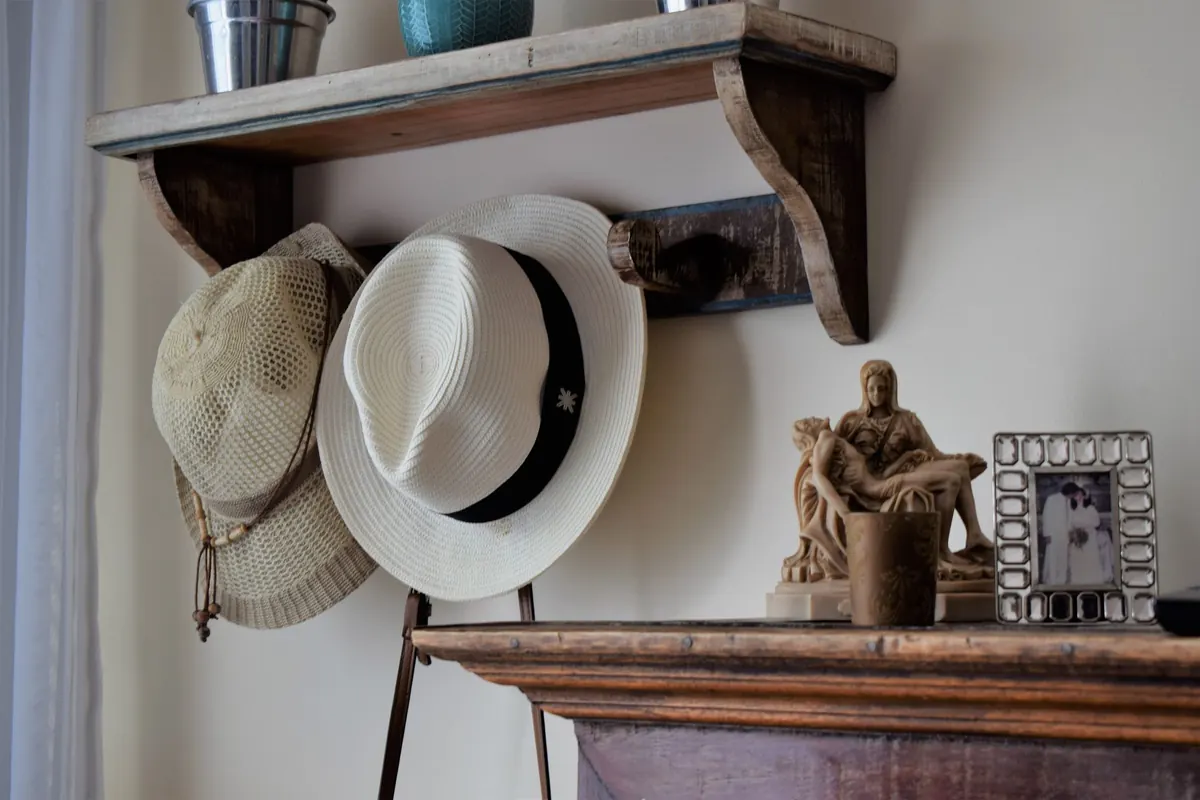
- Dark or figured wood — a small bowl, a picture frame, a bookend.
- Dried material — hydrangea heads, seed pods, wheat, honesty, twisted willow.
A single small houseplant or a trailing ivy also works, provided it gets enough light on that wall. Not every shelf needs one.
How to arrange a shelf that doesn't look cluttered
Clutter is usually a spacing problem rather than a quantity problem. Work through this order and the result will look considered without feeling staged.
- Empty the shelf completely. Wipe it, then leave it bare for a minute so you can see what the space actually is.
- Place the largest or tallest piece off-centre, roughly a third of the way along. Symmetry reads as formal; off-centre reads as relaxed.
- Group in odd numbers. Three objects together, then a gap, then a pair or a single. Even numbers lined up side by side look like a shop display.
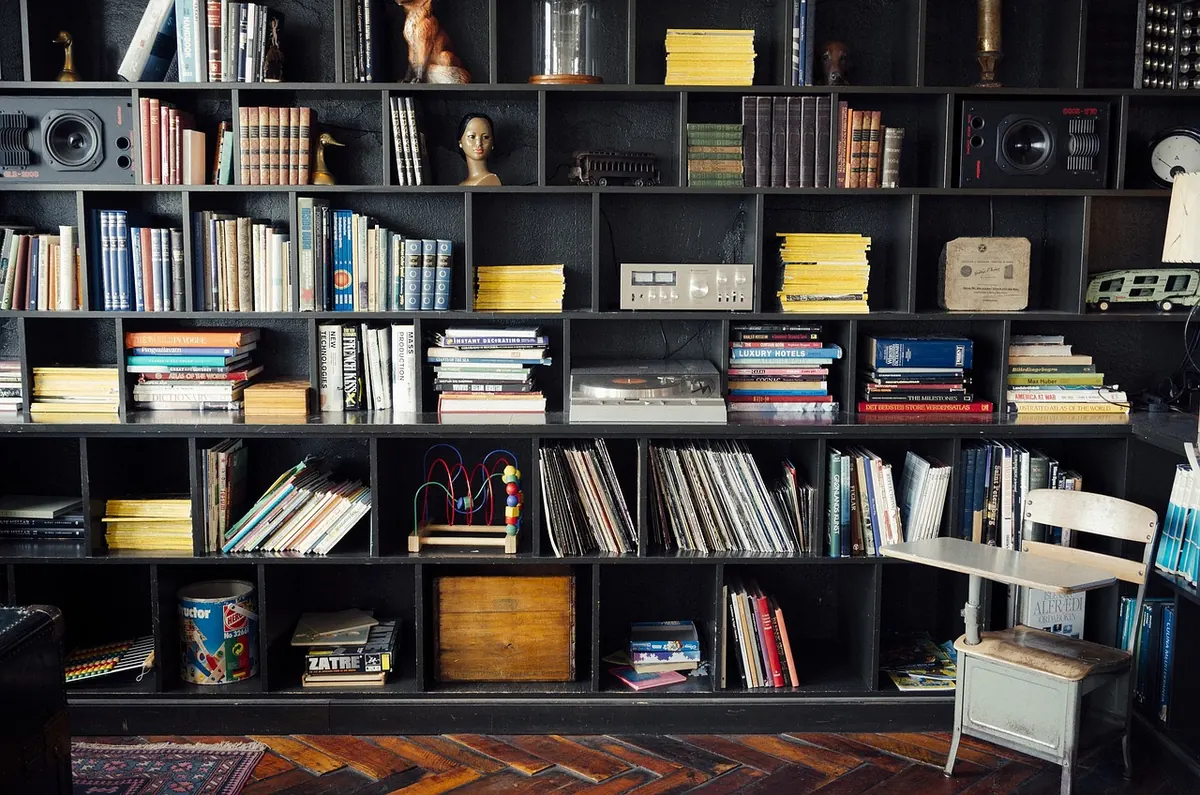
- Vary the heights. A tall vase, a medium bowl, a low dish. Use two or three stacked books to lift something small so it does not disappear.
- Layer front to back. Something flat behind — a framed print, a large book, a tray — then a mid-height object, then one small thing at the front. Choose small objects you actually want to pick up and look at: a bowl of conkers, a pebble from a walk, a brass key, a tiny candle holder, a folded pair of reading glasses. Two or three per shelf is plenty.
- Leave gaps. Empty shelf surface is what makes the objects on it look deliberate.
One rule for candles
Candles suit autumn shelves, but keep the flame clear of dried stems, fabric and the underside of the shelf above. Never leave a burning candle unattended, and check that any trailing cable from a small lamp is not pinched behind a heavy object.
Edit before you add
The strongest refreshes usually involve taking more away than putting on. As you remove summer pieces, sort them into three piles: keep out, store, and pass on. Wash the kept items, wrap anything fragile in tissue, and store summer glass and pale ceramics in a dark, dry cupboard rather than a damp loft or garage. Label the box by room and season so next spring is quick.
Try one-in-one-out as a habit. If a new charity-shop find goes on the shelf, something else comes off. It keeps the display from slowly thickening into a jumble.
A two-hour refresh, start to finish
Set aside a couple of hours, put the kettle on and work through it in order.
- Clear every shelf in the run and give the surfaces a proper dust and wipe.
- Choose your four or five colours and gather everything that fits from around the house.
- Add texture: one wool, one linen, one matte ceramic, one wood or metal piece per shelf.
- Build each shelf with the largest piece off-centre, odd-numbered groups and visible gaps.
- Store the summer pieces properly, then live with the display for a week before you change anything.
That last step matters. Seasonal styling looks best when it has had time to settle, and a shelf you have stopped fiddling with always reads calmer than one arranged five minutes ago.
Photo: JayMantri / Pixabay